How Meditation Improves Focus and Productivity at Work (Backed by Science)

In today’s fast-paced professional world, distractions are everywhere. Emails flood inboxes every few minutes, meetings consume valuable energy, and constant multitasking leaves many professionals mentally exhausted. Despite working longer hours, people often struggle to maintain deep focus, creativity, and emotional balance.

This is where meditation becomes more than just a wellness trend—it becomes a practical productivity tool.

For centuries, meditation has been practiced to calm the mind and increase awareness. Today, modern science confirms what ancient traditions have known all along: meditation can significantly improve concentration, decision-making, emotional resilience, and workplace performance.

Photo by <a href="https://unsplash.com/@sardarkamran128?utm_source=unsplash&utm_medium=referral&utm_content=creditCopyText">MUHAMMAD KAMRAN KHAN</a> on <a href="https://unsplash.com/photos/a-view-of-a-waterfall-from-inside-a-cave-jYF1kn3eyHo?utm_source=unsplash&utm_medium=referral&utm_content=creditCopyText">Unsplash</a>

Photo by MUHAMMAD KAMRAN KHAN on Unsplash

Companies like Google, Apple, and Nike have incorporated mindfulness programs into their workplace culture because they recognize their impact on employee productivity and well-being.

Let us explore how meditation improves focus and productivity at work—and what science says about it.


The Modern Workplace Problem: Mental Overload

Most professionals today are not physically tired; they are mentally overloaded.

A typical workday includes:

  • Constant notifications
  • Multitasking between projects
  • High-performance expectations
  • Long screen time
  • Stress from deadlines
  • Emotional burnout

Research suggests that the human brain was not designed to continuously switch attention between multiple tasks. Every interruption reduces cognitive efficiency and drains mental energy.

This is why many professionals experience:

  • Difficulty concentrating
  • Reduced creativity
  • Anxiety and overthinking
  • Emotional fatigue
  • Poor memory retention
  • Reduced motivation

Photo by <a href="https://unsplash.com/@franciscoegonzalez?utm_source=unsplash&utm_medium=referral&utm_content=creditCopyText">Francisco Gonzalez</a> on <a href="https://unsplash.com/photos/man-wearing-green-jacket-sitting-on-stool-chair-M8UEJd58GcE?utm_source=unsplash&utm_medium=referral&utm_content=creditCopyText">Unsplash</a> Photo by Francisco Gonzalez on Unsplash

Meditation helps reverse these effects by training the mind to remain calm, present, and attentive.

What Happens in the Brain During Meditation?

Meditation is essentially mental training.

When you meditate, you practice bringing your attention back to a single point—such as the breath, bodily sensations, or a mantra. Over time, this strengthens the brain’s ability to focus and reduces unnecessary mental noise.

Scientific studies using brain imaging technology show that regular meditation affects important regions of the brain associated with:

  • Attention
  • Emotional regulation
  • Memory
  • Self-awareness
  • Decision-making

One of the most important findings is that meditation reduces activity in the “default mode network” (DMN), the part of the brain responsible for mind-wandering and excessive thinking.

When the DMN becomes overactive, people tend to:

  • Lose focus easily
  • Overthink problems
  • Replay stressful situations
  • Become distracted

Meditation helps quiet this mental chatter, leading to greater clarity and concentration.

Photo by <a href="https://unsplash.com/@tatonomusic?utm_source=unsplash&utm_medium=referral&utm_content=creditCopyText">tatonomusic</a> on <a href="https://unsplash.com/photos/gray-and-black-stone-near-body-of-water-during-daytime-l8_-UnH6q_M?utm_source=unsplash&utm_medium=referral&utm_content=creditCopyText">Unsplash</a>

Photo by tatonomusic on Unsplash

Meditation Improves Attention Span

Attention is one of the most valuable assets in the digital age.

Studies have shown that even short daily meditation sessions can improve sustained attention and cognitive performance.

Professionals who meditate regularly often report:

  • Better concentration during meetings
  • Increased ability to complete tasks
  • Improved listening skills
  • Reduced distractibility

Meditation trains the brain similarly to how exercise trains the body. The more consistently you practice, the stronger your mental focus becomes.

In a workplace environment filled with interruptions, the ability to maintain attention is a competitive advantage.


Meditation Reduces Stress and Burnout

Stress is one of the biggest productivity killers.

When stress levels rise, the body releases cortisol, commonly known as the stress hormone. Excessive cortisol affects:

  • Memory
  • Sleep quality
  • Emotional stability
  • Decision-making
  • Energy levels

Meditation activates the parasympathetic nervous system—the body’s natural relaxation response.

This leads to:

  • Lower heart rate
  • Reduced anxiety
  • Improved breathing
  • Emotional calmness
  • Better resilience under pressure

Employees who manage stress effectively are more productive because they waste less energy on worry, emotional reactions, and mental fatigue.

Instead of reacting impulsively, meditation helps professionals respond thoughtfully and calmly.

Photo by <a href="https://unsplash.com/@still_loony?utm_source=unsplash&utm_medium=referral&utm_content=creditCopyText">Nadiia Ploshchenko 🇺🇦</a> on <a href="https://unsplash.com/photos/blue-butterfly-perched-on-brown-plant-during-daytime-wlusBD3nTRU?utm_source=unsplash&utm_medium=referral&utm_content=creditCopyText">Unsplash</a>

Photo by Nadiia Ploshchenko 🇺🇦 on Unsplash

Better Emotional Intelligence at Work

Productivity is not only about working hard—it is also about working well with people.

Meditation improves emotional intelligence by increasing self-awareness and emotional regulation.

Professionals who meditate regularly often become:

  • More patient
  • Better listeners
  • Less reactive
  • More empathetic
  • More collaborative

This has a direct impact on workplace relationships, leadership quality, and team communication.

Managers and leaders who practice mindfulness are often better equipped to handle conflict, make balanced decisions, and maintain calm during stressful situations.

In many organizations today, emotional intelligence is considered just as important as technical expertise.

Meditation Enhances Creativity and Problem-Solving

A stressed mind becomes narrow and reactive. A calm mind becomes creative.

Many professionals struggle with innovation because their minds are overloaded with constant information and pressure.

Meditation creates mental space.

When the mind becomes quiet, new ideas emerge naturally. This is why many entrepreneurs, writers, designers, and executives use meditation to improve creative thinking.

Research suggests that mindfulness practices improve cognitive flexibility—the brain’s ability to adapt, generate ideas, and think from different perspectives.

Instead of operating in survival mode, meditation helps the brain enter a state of clarity and insight.

Improved Memory and Decision-Making

Meditation has also been linked to improvements in working memory.

Working memory is essential for:

  • Managing projects
  • Retaining information
  • Strategic thinking
  • Problem-solving
  • Learning new skills

When the mind is cluttered with stress and distractions, memory performance declines.

Meditation improves mental clarity by reducing cognitive overload.

Professionals often notice that after consistent meditation practice, they:

  • Remember details more easily
  • Think more clearly
  • Make better decisions
  • Feel mentally organized

This becomes especially valuable for leaders, entrepreneurs, students, and knowledge workers.

How Much Meditation Is Needed?

One of the biggest misconceptions is that meditation requires hours of practice.

In reality, even 10–20 minutes daily can produce noticeable benefits over time.

Beginners can start with:

  1. Sit comfortably in a quiet place
  2. Close your eyes
  3. Focus on your breath
  4. Observe thoughts without judgment
  5. Gently return attention to the breath whenever distracted

Consistency matters more than duration.

A simple daily practice can gradually strengthen focus, emotional balance, and productivity.

Meditation in Corporate Culture

Many forward-thinking organizations now integrate mindfulness programs into the workplace.

Corporate meditation programs often include:

  • Guided meditation sessions
  • Mindfulness workshops
  • Breathing exercises
  • Stress management training
  • Silent reflection breaks

These initiatives are not merely wellness activities—they are performance-enhancement tools.

Organizations benefit through:

  • Increased employee engagement
  • Lower absenteeism
  • Improved morale
  • Better collaboration
  • Reduced burnout

Employees benefit through improved mental health, clarity, and work-life balance.

Final Thoughts

In a world full of distractions, meditation is becoming an essential skill for modern professionals.

It is not about escaping work or avoiding responsibilities. It is about developing the inner clarity required to work with greater focus, calmness, and effectiveness.

Science now confirms that meditation can:

  • Improve concentration
  • Reduce stress
  • Enhance creativity
  • Strengthen emotional intelligence
  • Boost productivity
  • Improve overall well-being

The greatest productivity tool is not another app, gadget, or productivity hack—it is a calm and focused mind.

Even a few minutes of daily meditation can transform the way professionals think, work, and live.

In the end, productivity is not about doing more things. It is about doing the right things with clarity, awareness, and presence.

And meditation helps us cultivate exactly that. To know more, Register here!


Caucasian females legs on yoga mat with yoga props

How to Turn Your Knowledge into Income Using Clarity, Meditation, and AI

In today’s fast-moving digital world, one truth stands out:

Your knowledge is no longer just personal—it is a powerful asset.

But here’s the challenge most working professionals face…You know a lot, yet you struggle to:

  • Identify what truly matters
  • Package your knowledge clearly
  • Turn it into a consistent income stream

This is not because you lack skill. It’s because you lack clarity. And clarity doesn’t come from thinking more.
It comes from slowing down, observing deeply, and aligning internally. This is where the powerful combination of Meditation + Clarity + AI becomes your transformation engine.


Let’s explore how you can use this triad to turn your knowledge into income. If you would like to know more, register for my free webinar now. REGISTER

Step 1: Clarity Before Strategy

Most people jump straight into:

  • “What course should I create?”
  • “Which niche should I pick?”
  • “How do I earn ₹1 lakh per month?”

But without clarity, all strategies fail. Clarity answers three essential questions:

  1. What do I know deeply?
  2. Who needs this knowledge?
  3. What transformation can I offer?

Without these answers, you will keep switching ideas, doubting yourself, and delaying action.

The Problem: Mental Noise

Working professionals today suffer from:

  • Overthinking
  • Comparison
  • Information overload
  • Decision fatigue

This creates confusion disguised as productivity.

stressed individual

The Solution: Inner Clarity

Clarity is not something you “figure out.”

It is something you discover when the mind becomes still.

Step 2: Meditation—The Gateway to Clarity

Meditation is not just for peace—it is a decision-making tool.

When practiced correctly, meditation helps you:

  • Reduce mental clutter
  • Increase focus
  • Access intuitive intelligence
  • Recognize your natural strengths

A Simple Practice (10 Minutes Daily)

  1. Sit comfortably with your spine straight
  2. Close your eyes
  3. Observe your breath
  4. Allow thoughts to come and go
  5. Ask gently:
    “What is one thing I truly know well?”

Don’t force an answer.

Zen proverb

Over time, patterns will emerge:

  • Skills you enjoy using
  • Problems people ask you to solve
  • Experiences that shaped you

This is your knowledge goldmine.

Step 3: Identify Your “Monetizable Knowledge Zone”

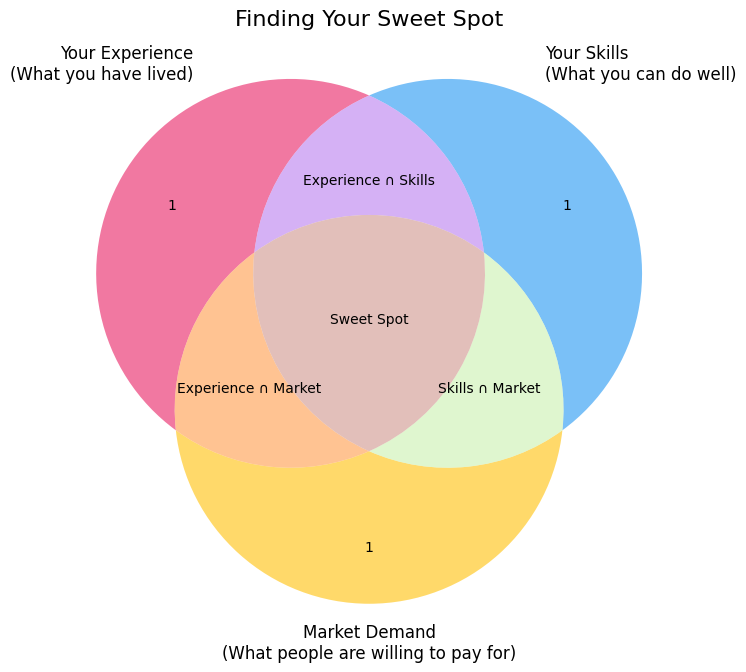
Not all knowledge makes money. You need to find the intersection of:

  • Your Experience (What you have lived)
  • Your Skills (What you can do well)
  • Market Demand (What people are willing to pay for)

This is your Monetizable Knowledge Zone (MKZ).

Examples:

  • A corporate employee → Time management system
  • A yoga practitioner → Stress relief routines
  • A manager → Leadership frameworks
  • A parent → Work-life balance strategies


The key is simple:

👉 People don’t pay for information. They pay for transformation.

Step 4: Use AI to Refine Your Niche

Once you gain clarity, AI becomes your accelerator.

AI tools like ChatGPT, Gemini, or Copilot can help you:

  • Validate your niche
  • Identify customer pain points
  • Generate content ideas
  • Structure your course or program
  • Write marketing copy

Example Prompt:

“Act as a market research expert.
I help working professionals reduce stress using meditation.
What are their top 10 pain points and desired outcomes?”

Within seconds, AI gives you:

  • Clear language your audience uses
  • Emotional triggers
  • Content direction

This saves months of confusion.

Step 5: Design a Simple Knowledge Product

You don’t need a complex course to start.

Start small.

Your First Product Can Be:

  • A 3-day workshop
  • A 5-day challenge
  • A 60-minute masterclass
  • A guided meditation series
  • A beginner framework

For example:

“5-Day Stress Reset for Working Professionals”

Each day can include:

  • 10-minute meditation
  • 10-minute teaching
  • 1 actionable exercise

Simple. Practical. Transformational.

Step 6: Package Your Knowledge into a System

People trust systems more than random advice.

This is where your signature framework comes in.

For example:

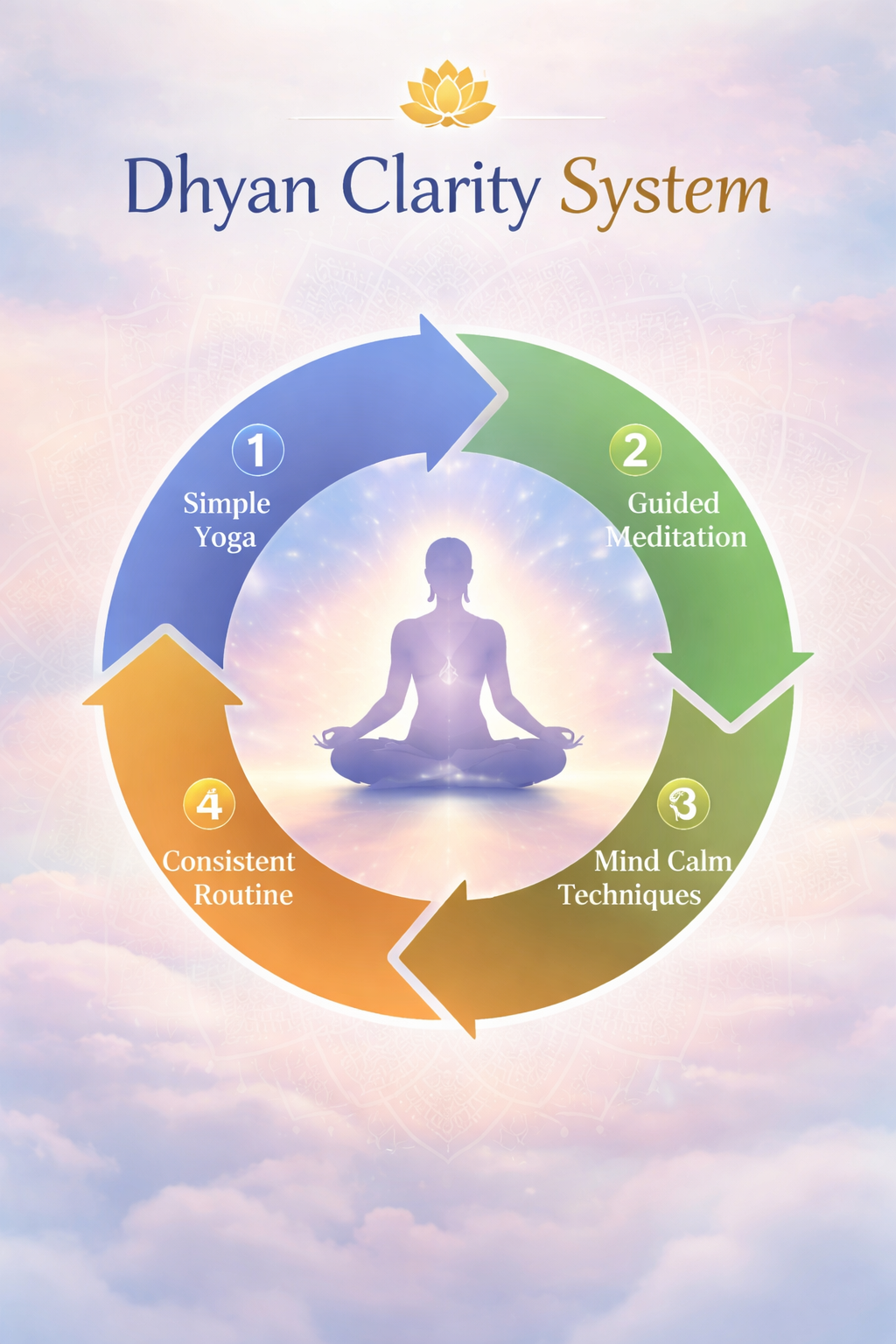
The Dhyan Clarity System

  1. Pause – Calm the mind through meditation
  2. Perceive – Observe patterns in your life
  3. Prioritize – Identify what truly matters
  4. Package – Turn knowledge into structured solutions
  5. Profit – Share and monetize your wisdom

When you create a system:

  • You become memorable
  • Your teaching becomes scalable
  • Your audience gains confidence

Step 7: Build Trust Through Content

Before people buy from you, they must trust you.

Content is your bridge.

What to Share:

  • Personal stories
  • Lessons learned
  • Simple frameworks
  • Short practices
  • Client transformations

Content Ideas:

  • “Why overthinking is killing your productivity”
  • “3-minute breathing technique for instant clarity”
  • “How I turned my knowledge into income”

Consistency builds authority.

Step 8: Create an Income Pathway

Here’s a simple income ladder you can follow:

  1. Free Content (Social media, reels, posts)
  2. Low-Ticket Offer (₹499 – ₹2500 workshop)
  3. Core Program (₹5000 – ₹15000 course)
  4. Premium Offering (₹25,000+ mentorship)

Each level builds:

  • Trust
  • Transformation
  • Revenue

Step 9: Overcome the Fear of Selling

Many people hesitate to monetize their knowledge because they feel:

  • “Who am I to teach?”
  • “What if people judge me?”
  • “What if I fail?”

But here’s the truth:

Photo by Gabriella Clare Marino on Unsplash

👉 If your knowledge can help someone, it deserves to be shared.

Selling is not manipulation.

It is service with structure.

Step 10: Align Income with Purpose

The real goal is not just income.

It is meaningful income.

When you combine:

  • Your inner clarity
  • Your lived experience
  • Your intention to serve

You create something powerful:

👉 A purpose-driven digital business

This is not just about earning ₹1 lakh per month.

It is about:

  • Freedom of time
  • Freedom of expression
  • Freedom of impact

Final Thoughts: Your Knowledge is Your North Star

Photo by krakenimages on Unsplash

You don’t need to start from scratch.

You already have:

  • Experiences
  • Lessons
  • Insights

What you need is:

  • Clarity through meditation
  • Direction through awareness
  • Acceleration through AI

Start small.

Stay consistent.

Trust your journey.

Because in this new digital age, the people who succeed are not the ones who know everything…

But the ones who can transform what they know into value for others.

Register for the free webinar now!

REGISTER


Photo by Joshua Earle on Unsplash

The Dhyan Clarity System: A Practical Guide to Designing a Purpose-Driven Life

In today’s fast-paced world, most working professionals are not lacking intelligence, talent, or opportunity and what they are lacking is clarity. Consider this: You wake up, check your phone, rush to work, attend meetings, chase deadlines—and somewhere in between, a silent question keeps echoing: “Is this really what I am meant to do?”

This is not a failure of capability. This is a failure of inner alignment. And that is exactly where The Dhyan Clarity System comes in—not as another motivational idea, but as a practical, structured path to redesign your life from within.

🌿 What is the Dhyan Clarity System?

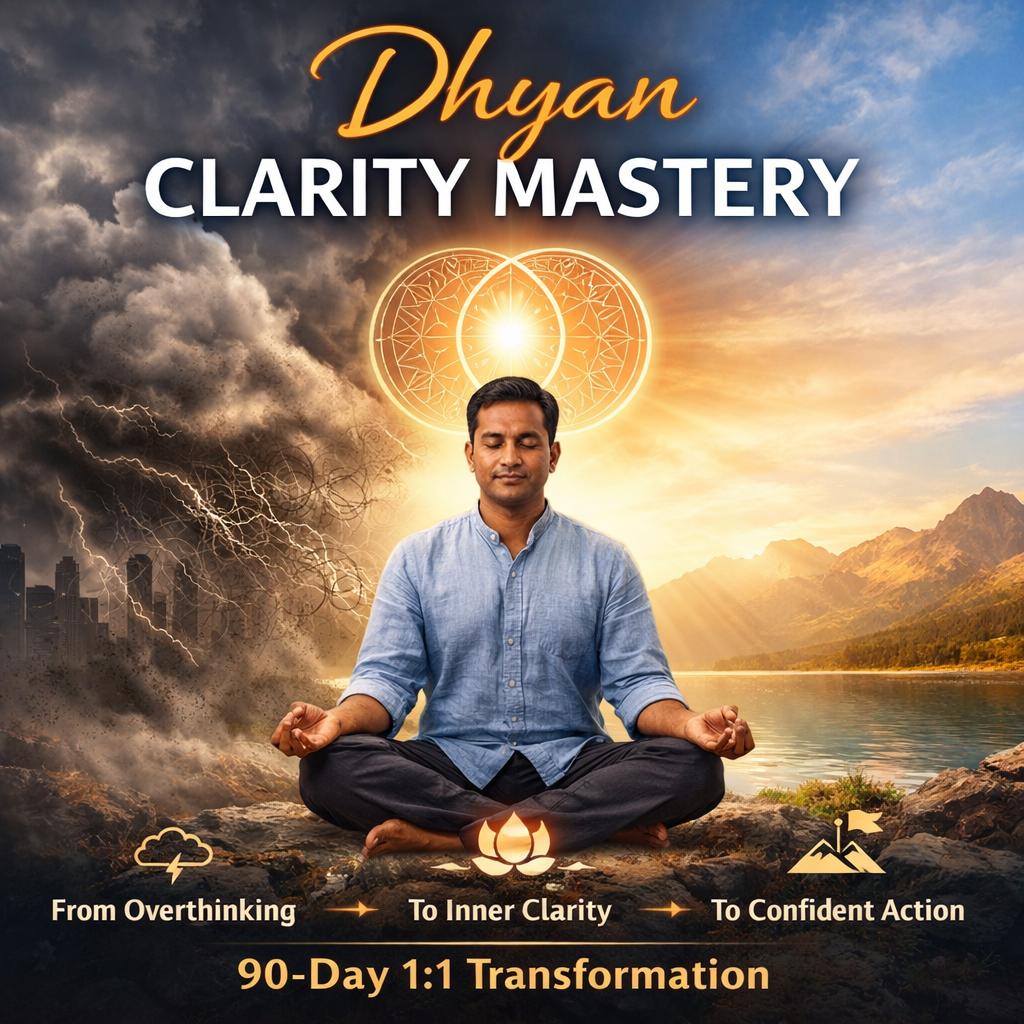
The Dhyan Clarity System is a simple yet powerful framework that combines Yoga, Meditation, and Self-Inquiry to help you move from:

  • Overthinking → Clear thinking
  • Stress → Stability
  • Confusion → Direction
  • Survival → Purpose

Unlike traditional approaches that focus only on productivity or external success, this system works on your inner operating system. Because your life is not shaped by your circumstances—it is shaped by the quality of your awareness.

man on introspectionPhoto by Marino Linic on Unsplash

🧠 Why Most Professionals Feel Lost

Let’s be honest. Most people are not living—they are reacting.

  • Reacting to emails
  • Reacting to expectations
  • Reacting to fear of missing out
  • Reacting to societal definitions of success

Over time, this creates mental noise. And when the mind is noisy, clarity becomes impossible. This is why even successful professionals feel:

  • Mentally exhausted
  • Emotionally drained
  • Directionless despite achievements

Clarity is not something you “find” outside. Clarity is something you create inside.

🔥 The Core Principle: Clarity is a State, Not a Decision

Most people believe: “Once I get clarity, I will feel peaceful.”

But the truth is the opposite: “When you become peaceful, clarity emerges.”

This is the foundation of the Dhyan Clarity System.

Instead of forcing decisions, you first train your mind to become still, aware, and focused.

From that space, the right direction becomes obvious.

a system for clarity

🧘‍♂️ The 3 Pillars of the Dhyan Clarity System

  1. Body Alignment (Yoga – The Foundation)

Your body is not separate from your mind. A restless body creates a restless mind. Through simple, consistent yoga practices:

  • Your nervous system calms down
  • Your energy levels stabilize
  • Your mind becomes less reactive

You don’t need 2 hours. Even 20 minutes of conscious movement daily can shift your internal state.

  1. Mind Stillness (Meditation – The Core)

Meditation is not about stopping thoughts. It is about detaching from them. When you sit in silence and observe your breath:

  • Thoughts lose their control
  • Emotional clutter dissolves
  • Awareness deepens

This is where clarity begins. Because clarity is not created by thinking more.

It is revealed when thinking slows down.

  1. Self-Inquiry (Dhyan – The Breakthrough)

This is where transformation happens.

Once your mind becomes calm, you begin to ask:

  • What truly matters to me?
  • What kind of life do I want to create?
  • Am I living by design or by default?

Unlike overthinking, self-inquiry is not chaotic.

It is guided reflection from a space of awareness.

And this leads to powerful insights that can reshape your life direction.

⚡ The 4-Step Dhyan Clarity Process

Let’s make this practical. Here is how you can start designing your purpose-driven life:

Step 1: Pause the Noise

Before changing your life, you must slow it down.

  • Reduce unnecessary digital consumption
  • Create 20 minutes of silence daily
  • Step away from constant stimulation

This is not a luxury. This is a necessity. Because a noisy mind cannot design a meaningful life.

the road less travelledPhoto by Emma Simpson on Unsplash

Step 2: Build Your Daily Reset Ritual

Your clarity begins with your daily routine. A simple structure:

  • Morning (10–15 min): Light yoga + breath awareness
  • Evening (10–15 min): Meditation + reflection

This becomes your anchor.

No matter how chaotic your day is, this practice brings you back to yourself.

Step 3: Ask Better Questions

Your life changes the moment your questions change.

Instead of:

  • “What should I do next?”

Ask:

  • “What kind of life do I truly want?”
  • “What gives me energy, not just income?”
  • “What would I choose if fear was not involved?”

Clarity is hidden in the quality of your questions.

Step 4: Take Aligned Action

Clarity without action creates frustration.

Action without clarity creates confusion.

You need both. Start small:

  • Make one decision aligned with your inner truth
  • Take one step toward a meaningful direction
  • Remove one thing that drains your energy

Over time, these small shifts create a completely new life trajectory.

man looking for a way out of the windowPhoto by Laurenz Kleinheider on Unsplash

🌟 Designing a Purpose-Driven Life

A purpose-driven life is not about quitting your job and going to the Himalayas.

It is about living consciously.

It means:

  • You know why you are doing what you are doing
  • Your actions are aligned with your values
  • Your work becomes an expression of your inner clarity

Purpose is not something you discover overnight.

It is something you design, refine, and evolve.

💡 The Real Transformation

When you practice the Dhyan Clarity System consistently, something profound happens:

  • Your mind becomes quieter
  • Your decisions become sharper
  • Your energy becomes more focused
  • Your life becomes intentional

You stop chasing everything.

And start choosing what truly matters.

🧭 Final Thought: Your North Star

Think of your life like a journey at sea.

Without clarity, you drift. With clarity, you navigate.

The Dhyan Clarity System is not just a practice—it is your North Star.

It guides you back to yourself. And once you are aligned within, the external world begins to align with you.

symbolic way to the destinationPhoto by Wil Stewart on Unsplash

Start Simple. Stay Consistent. Go Deep.

You don’t need more information. You need inner connection. Because the answers you are searching for… are not out there. In fact, they are already within you—waiting to be seen in stillness. Ready to explore the vast continent that is you?

Register now for the webinar Rise above Stress


How to Find Your Life Purpose Using Yoga and Meditation (Step-by-Step Guide)

On a quiet morning, if you sit under a tree and ask yourself a simple question—
“What is the purpose of this tree?”—what answer can you honestly give?

Does the tree exist to give shade? To produce oxygen? To bear fruit? Or is it simply… being?

Photo by Sorin Gheorghita on Unsplash

The tree does not struggle to define its purpose. It does not wake up in anxiety, wondering if it is “on the right path.” Nor does it compare itself with another tree. It grows and it lives expressing itself. And perhaps, that is the most profound insight into life purpose. On this day, associated with the enlightenment of Osho, a master who challenged conventional thinking, we are reminded of a radical idea:

Life has no fixed purpose.
The purpose of life is the meaning you give to it.

This realization is not depressing—it is deeply liberating.

The Problem: Why We Feel Lost

Most people are not confused because they lack intelligence or ability. They are confused because they have been conditioned to believe:

  • There is a single correct purpose they must discover
  • Purpose is something external to be achieved
  • Success equals meaning

This creates pressure. A working professional in their 30s or 40s often feels this silently: “I have a job, a family, responsibilities… but something is missing.” That “missing” is not purpose.

It is disconnection.

Photo by Sorin Gheorghita  Unsplash

The Shift: Purpose Is Not Found, It Is Created

Yoga and meditation do not give you a purpose. They do something far more powerful: They remove the noise that prevents you from seeing clearly. When the mind becomes calm, when the body becomes aligned, when awareness deepens—you stop asking, “What should I do with my life?”

And you begin asking,
“What feels true to me right now?”

Purpose is not a destination. It is a living expression of your clarity.

Step-by-Step Guide to Discovering Your Life Purpose

This is not a formula. It is a process of returning to yourself.

Step 1: Slow Down the Mind (Meditation)

If your mind is constantly busy, no clarity is possible. Through a simple daily meditation practice, you begin to observe your thoughts instead of being controlled by them.

Start with just 10–15 minutes:

  • Sit comfortably
  • Close your eyes
  • Observe your breath
  • Watch your thoughts without judgment

Over time, something subtle happens. The noise reduces. And in that silence, clarity begins to emerge.

Step 2: Reconnect with the Body (Yoga)

Your body holds intelligence that your mind often ignores. Through yoga, you move from thinking to feeling.

Simple practices like:

  • Gentle stretches
  • Conscious breathing
  • Slow, mindful movements

help release stored tension and emotional blocks. A relaxed body creates a receptive mind. And a receptive mind is open to insight.

Step 3: Question Your Conditioning

Ask yourself honestly:

  • Am I living based on my truth or others’ expectations?
  • What am I doing just to “fit in”?
  • What truly brings me alive?

This is where courage is required. Because many answers may challenge the life you have built.

But remember—clarity is not meant to destroy your life.

It is meant to refine it.

Photo by Ali Ahmadi on Unsplash

Step 4: Notice What Gives You Energy

Purpose is not always something grand. It often reveals itself in small moments.

Pay attention to:

  • Activities that make you lose track of time
  • Conversations that energize you
  • Work that feels meaningful, even if it is challenging

Your life purpose leaves clues. But only a calm and aware mind can notice them.

Step 5: Start Small, But Start Now

You don’t need to quit your job or make drastic changes. Purpose is not discovered through big decisions. It is discovered through consistent alignment. If teaching excites you, start sharing and If writing calls you, start expressing. Furthermore, If guiding others feels natural, begin by helping. Action brings clarity. Not the other way around.

Step 6: Create Your Own Meaning

This is the most important step. There is no universal answer to:  “What is the purpose of life?”

Just like the tree does not define its existence—
you are not here to fit into a predefined role. You are here to create meaning through how you live.

Through your awareness.
>Through your actions.
>Through your contribution.

Purpose is not something you find once. It evolves as you evolve.

The Role of Yoga and Meditation in This Journey

Photo by PRATEEK JAISWAL on Unsplash

Yoga and meditation are not just practices. They are tools for inner alignment.

They help you:

  • Move from confusion to clarity
  • Reduce anxiety and overthinking
  • Build focus and emotional balance
  • Develop awareness of your inner world

In today’s fast-paced life, especially for working professionals, this inner stability is essential. Without it, we keep searching outside. With it, we begin to discover within.

A Gentle Reflection

Take a moment now.

Pause.

Ask yourself—not intellectually, but honestly:

“Am I living a life that feels true to me?”

Not perfect. Need not be successful by society’s standards. But true to you. If the answer is unclear, that’s okay. Clarity is not a one-time realization. It is a practice.

A Quiet Invitation

You don’t need to change everything overnight. In fact, you don’t need to have all the answers. But you can begin with a few minutes of meditation  and a simple yoga practice. Apart from a willingness to observe your life more consciously. Because the moment you become aware—the journey has already begun.

Conclusion: From Seeking to Living

The search for purpose often keeps us restless. In fact, yoga and meditation gently shift us from seeking to living. Besides, in living fully, consciously, and authentically—purpose no longer remains a question. In fact, it becomes your experience. Just like the tree. It does not ask,
“What is my purpose?”

It simply grows toward the light. Want to know more? Register for my webinar now!

From Mental Chaos to Calm: How to Rewire Your Mind with Yoga and Meditation

Introduction: The Invisible Storm Within

On the outside, everything may look fine. You are working. You are earning and also you are fulfilling responsibilities. But inside…There is noise. Endless thinking. Uncertainty about the future. Stress about job security, finances, and expectations.
A quiet anxiety that never really leaves you. If you relate to this, you are not alone.

Photo by engin akyurt on Unsplash

Thousands of working professionals between are silently battling what I call “mental chaos”—a state where the mind is constantly active but rarely at peace. The good news? This is not permanent. Your mind can be rewired. And the most powerful tools to do that are Yoga and Meditation—when applied the right way.

What Is Mental Chaos?

Mental chaos is not just stress. It is a combination of:

  • Overthinking the past
  • Worrying about the future
  • Feeling stuck in the present

You may experience it as:

  • Difficulty focusing at work
  • Emotional exhaustion
  • Indecisiveness
  • Irritability at home
  • Poor sleep

👉 The mind becomes your biggest obstacle instead of your greatest asset

Why Traditional Solutions Don’t Work

Most people try to manage stress through:

  • Entertainment (scrolling, binge-watching)
  • Temporary relaxation (vacations, distractions)
  • Positive thinking

But these are short-term escapes, not solutions. Because the root problem is not your situation.

👉 The root problem is how your mind processes your situation

Unless that changes, the cycle continues.

The Science Behind Rewiring the Mind

Your brain is not fixed. It has something called neuroplasticity—the ability to reorganize itself based on your habits and experiences. What does this mean for you?

👉 The patterns of stress, anxiety, and overthinking can be changed

But only if you:

  • Reduce mental noise
  • Create new patterns of awareness
  • Reinforce calm and clarity consistently

This is exactly what Yoga and Meditation do—when practiced as a system, not randomly.

The Dhyan Clarity System: From Chaos → Calm → Clarity

Over the years, working with professionals like you, I developed a structured approach called the Dhyan Clarity System.

It is not just about relaxation. It is about rewiring how your mind functions.

Here’s how it works:

Step 1: Calm the Nervous System (Yoga for Release)

Your stress is not only mental—it is stored in your body.

Tight shoulders.
Shallow breathing.
Restlessness.

Simple yogic practices can release this:

👉Recommended practice (10–15 minutes daily):

  • Gentle stretches for neck and shoulders
  • Slow, mindful breathing (Pranayama)
  • Basic asanas to release tension

👉 This signals your body: “You are safe”

When the body relaxes, the mind follows.

Step 2: Slow Down the Mind (Dhyan Meditation)

Once the body is calm, we work with the mind.

This is where most people struggle—they try to control thoughts.

Instead, in Dhyan, we:

  • Observe the breath
  • Witness thoughts without reacting
  • Allow the mind to settle naturally

Practice (5–10 minutes):

  • Sit comfortably
  • Focus on natural breathing
  • Gently return attention when distracted

👉 Over time, this reduces:

  • Thought intensity
  • Emotional reactivity
  • Mental clutter

Step 3: Rebuild Mental Patterns (Clarity Conditioning)

This is where transformation happens.

After calming the mind, we introduce directed thinking.

Ask yourself:

“What truly matters in my life right now?”
“What is within my control?”

Instead of scattered thinking, you develop:

  • Focused decision-making
  • Emotional balance
  • Confidence in action

👉 You move from reaction → intention

Real Transformation: What You Can Expect

With consistent practice, professionals experience:

  • Reduced stress and anxiety
  • Better sleep quality
  • Improved focus at work
  • Clearer decision-making
  • Emotional stability
  • Renewed sense of purpose

But more importantly…

👉 You feel in control of your life again

A Story You Might Relate To

One of my participants, a 42-year-old IT professional, came with:

  • Severe overthinking
  • Job insecurity stress
  • Constant anxiety about finances

Within a few weeks of practicing the Dhyan Clarity System:

  • His sleep improved
  • His thinking became sharper
  • He started making confident decisions

But the biggest shift?

👉 He stopped reacting to life and started responding with clarity

Why This Matters Now More Than Ever

Today’s world is:

  • Fast
  • Uncertain
  • Demanding

If your mind is not trained, it becomes overwhelmed.

But if your mind is calm and clear, you gain an unfair advantage.

👉 Same life. Different experience.

A Gentle Truth

You don’t need more effort. You don’t need more information. What you need:

  • The right system
  • The right guidance
  • The right consistency

That’s what creates lasting change.

 Your Next Step: Experience It for Yourself

Reading is a great first step.

But transformation happens through guided experience.

That’s why I invite you to my free webinar:

🌿 “Mindful Beginnings: From Stress to Stillness”

In this session, you will discover:

  • How to instantly calm your mind in stressful situations
  • A simple framework to gain clarity in life and career
  • How to break free from overthinking and anxiety
  • How to design a more peaceful, purposeful life

👉 This is not theory—it is practical and experiential

For Those Who Want Deeper Transformation

At the end of the webinar, I also offer a 1:1 Clarity Consultation for those who are serious about change.

In this personalized session, we will:

  • Identify your core mental patterns
  • Address your specific stress triggers
  • Design a customized yoga + meditation plan for you

This is where real transformation begins.

Final Thought

Mental chaos is not your destiny.

It is a pattern—and patterns can be changed.

Through Yoga, Meditation, and the Dhyan Clarity System, you can:

👉 Move from noise → stillness
👉 From confusion → clarity
👉 From stress → strength

And most importantly…

👉 From surviving life to living it with awareness and purpose

Register Here by Clicking the below Link:

🌿 “Mindful Beginnings: From Stress to Stillness”

Newsletter

Yoga Dhyan Updates & News Weekly

Yoga Dhyan Center
Sign up to be in the know.