The Work-from-Home Conundrum: Balancing Business, Pleasure, and a Pile of Dishes

Working from home has become the norm for many, offering an unprecedented level of flexibility. You no longer have to endure the daily grind of commuting, and you get to work in your favorite pajamas. Sounds like paradise, right? But let’s be honest, it’s not all Netflix breaks and yoga stretches. The reality is, working from home has thrown our work-life balance into a blender, and we’re all still trying to figure out how to hit the “smoothie” button without leaving behind a bitter aftertaste of unwashed dishes and unfinished laundry.

Handsome millennial indian man project manager working from home

The Mirage of Work-Life Balance

In theory, working from home should be the perfect blend of business and pleasure. You can wake up late, avoid traffic, and maybe squeeze in a quick workout before your first Zoom call. But in reality, home is no longer a sanctuary; it’s a battleground where deadlines and domestic duties clash. The line between work and personal life becomes so blurry that sometimes it feels like you’re juggling both without ever truly giving either the attention they deserve.

While you’re in a virtual meeting discussing quarterly reports, your mind drifts to the growing pile of laundry, the dishes in the sink, or the dog that hasn’t been walked in two days. Congratulations! You’ve become a multitasking maestro, balancing your professional responsibilities with the pressing needs of your household. Or have you?

Isn’t this the epitome of modern-day “responsibility?” Thinking about the office while folding laundry, or vice versa, makes you feel like a responsible family man or woman, right? Wrong. It makes you a master of distraction.

The Perils of “Always On” Mode

Working from home has somehow made us more reachable than ever. The concept of the 9-to-5 has dissolved, and we’re now always available for a quick email, a Slack message, or a last-minute project update. The end result? We’re constantly in “work mode,” even when we’re supposed to be relaxing.

The mental switch from work to personal time has become like trying to turn off a light that’s connected to a faulty switch—it just keeps flickering. You might physically be at home, but mentally, you’re still sitting at your desk. And no, folding laundry while mentally strategizing your next presentation doesn’t qualify as “multitasking.” It qualifies as stress.

 Mindfulness: The Antidote to Modern Multitasking Madness

So, how do you stop thinking about the other shore—the pile of laundry, the emails waiting to be answered, the incessant Slack notifications—and stay anchored in the present moment? The answer is mindfulness meditation.

Now, before you roll your eyes and dismiss this as just another trendy wellness fad, hear me out. Mindfulness is more than just sitting cross-legged and chanting “Om” (though that can be fun too). It’s a practice that helps you cultivate awareness of your thoughts and feelings in the present moment.

Think of mindfulness meditation as hitting the pause button on your overactive brain. You’re still there, but instead of worrying about all the things you haven’t done or need to do, you’re simply being. And this isn’t some mystical, unattainable state reserved for Buddhist monks—it’s something anyone can practice.

Why Mindfulness Works in the Work-from-Home Chaos

Let’s face it, trying to balance work and personal life while working from home is a lot like riding a unicycle on a tightrope while juggling flaming torches. You need balance, focus, and above all, the ability to not let distractions pull you down. Mindfulness meditation gives you the tools to navigate this chaotic tightrope with grace.

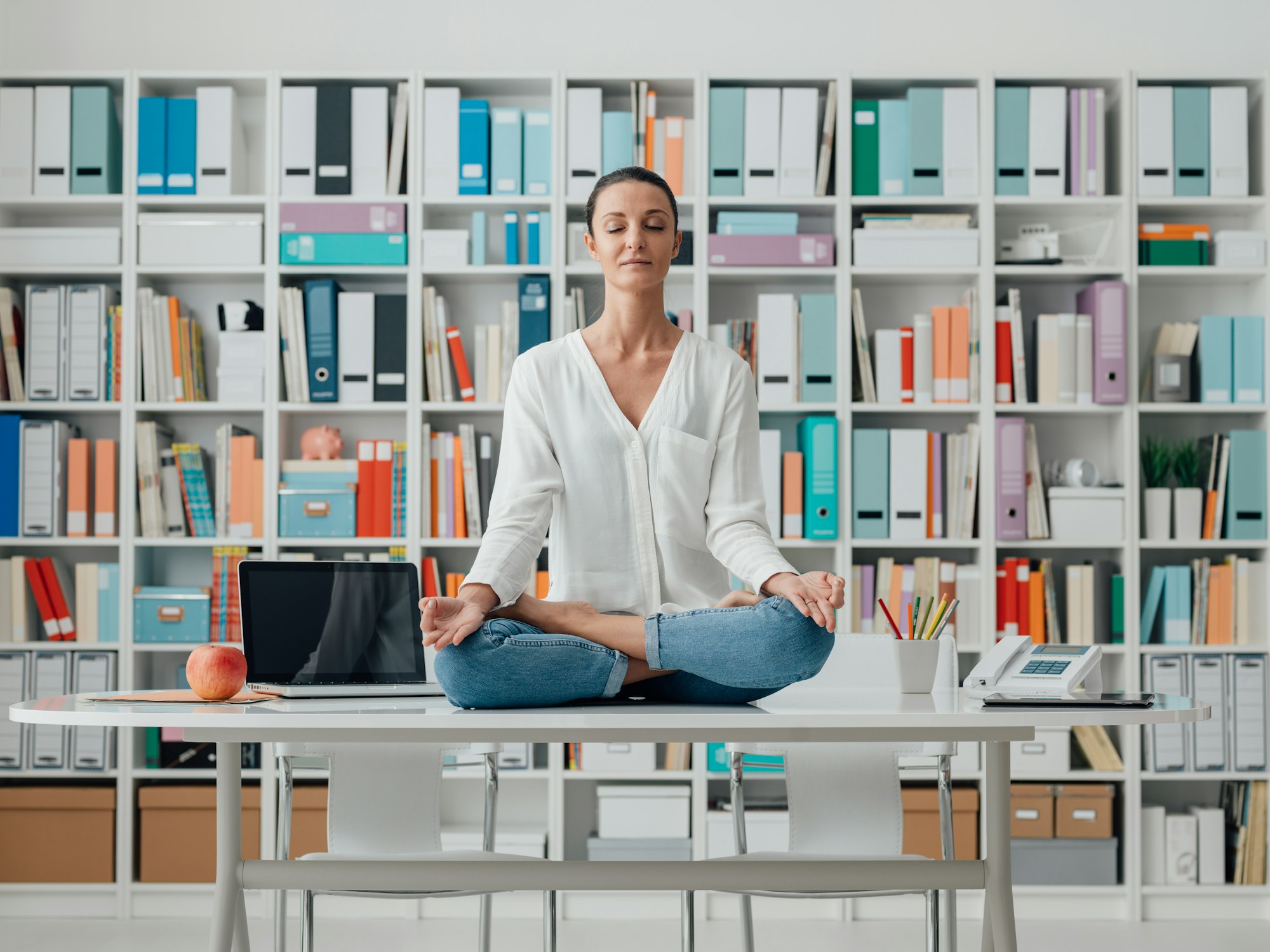
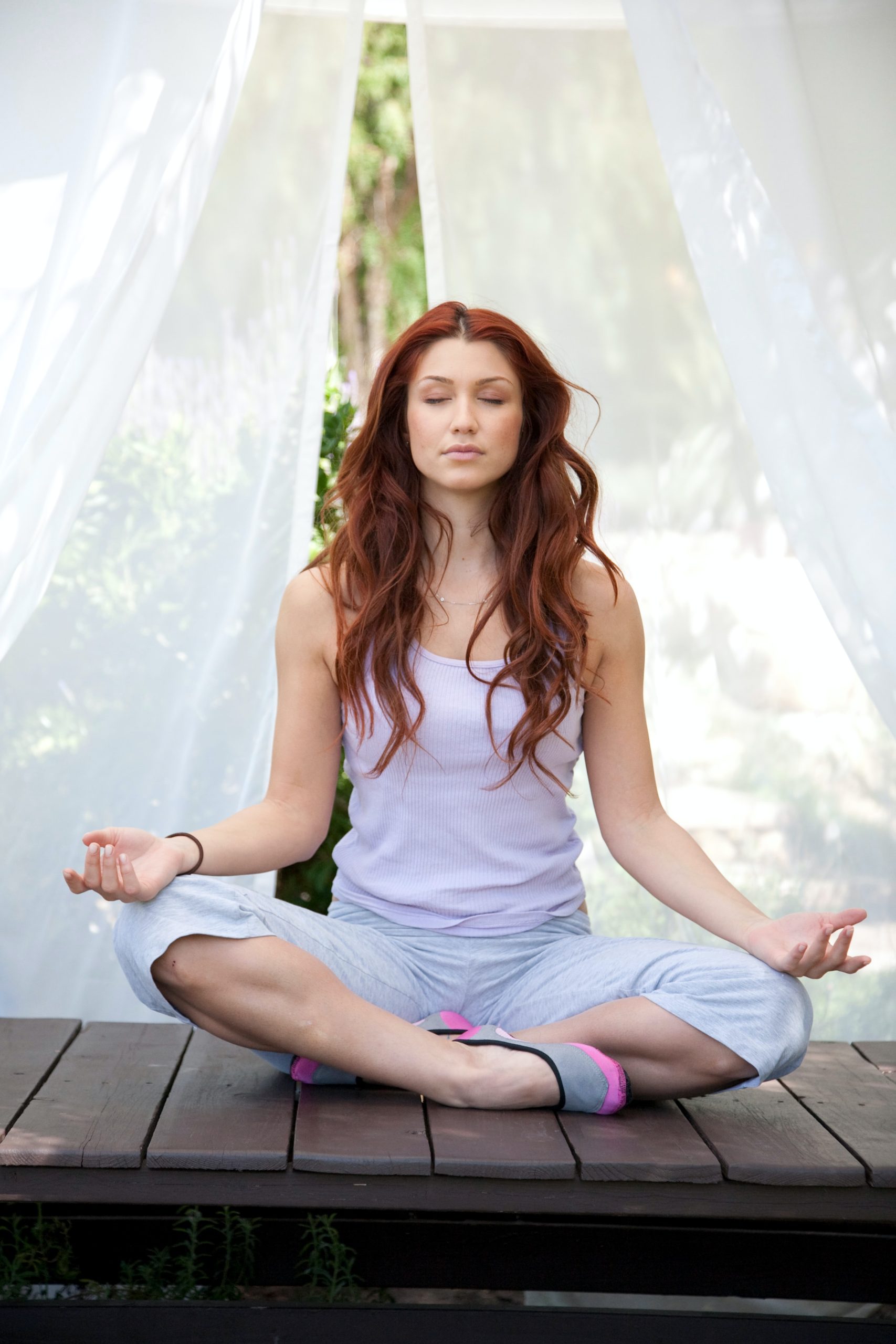
Woman practicing meditation on a desk

mindfulness

Here’s how mindfulness can help:
1. It Helps You Recognize Distractions

The first step to overcoming distractions is recognizing them. How many times have you started a task, only to be interrupted by the nagging thought, “I should really clean the kitchen”? Mindfulness teaches you to become aware of these intrusive thoughts without getting sucked into them. Instead of acting on every impulse, you can observe the thought, acknowledge it, and then let it go.

2. It Keeps You Anchored in the Moment

Work from home often means that while you’re answering emails, you’re also mentally compiling a grocery list or planning your next meal. Mindfulness brings you back to the present, helping you focus on one task at a time. It’s a gentle reminder that you can only control what’s happening right now. The future? That’ll sort itself out when the time comes.

3. It Reduces Stress

Stress is the silent killer of productivity, and it’s amplified when you’re trying to manage work and personal responsibilities simultaneously. Mindfulness meditation encourages deep breathing and relaxation, which helps reduce the stress hormone cortisol. When you feel less stressed, you’re more likely to make clear, focused decisions without feeling overwhelmed by your endless to-do list.

 4. It Creates a Buffer Between Work and Home Life

Mindfulness can help create that much-needed mental boundary between work time and personal time. By practicing meditation at the start or end of your workday, you give your brain a signal that it’s time to switch gears. It’s like a mental commute without the traffic jams.

Practical Tips to Stay Mindful When You’re Working from Home

So, how do you incorporate mindfulness into your work-from-home routine without feeling like you’re adding yet another task to your overflowing to-do list?

1. Start with Short Meditation Sessions: You don’t need to meditate for hours to experience the benefits. Start with 5-10 minutes of mindfulness each morning. Simply sit in a comfortable position, close your eyes, and focus on your breath. If your mind wanders (which it will), gently bring it back to your breath.

2. Use Mindfulness to Transition Between Tasks: Before you switch from one task to another, take a mindful pause. Close your eyes, take a few deep breaths, and focus on the present moment. This helps reset your brain and prepare for the next task with a clear mind.

3. Practice Mindful Listening: During meetings or conversations, practice being fully present. Instead of planning your response while the other person is speaking, focus entirely on their words. This enhances communication and helps you stay engaged.

4. Schedule “No-Work” Zones: Create boundaries where work doesn’t intrude. Whether it’s during meals or your evening relaxation, establish specific times where work is off-limits. This way, you can fully immerse yourself in personal activities without feeling guilty about neglected work.

Conclusion: Business, Pleasure, and Mindfulness

The idea that working from home should be a perfect balance of business and pleasure is a myth. But the good news is, you don’t have to achieve perfection. You just have to find a way to manage the chaos without letting it overwhelm you. That’s where mindfulness comes in.

By practicing mindfulness meditation, you learn to stay present, avoid distractions, and reduce stress. You may not find the perfect work-life balance, but you’ll discover a way to navigate the two without constantly thinking about the other shore. So, next time you’re in the middle of a meeting and start worrying about the dishes, take a deep breath, focus on the moment, and let the mindfulness magic do its work.

Because let’s face it, the dishes can wait. But your peace of mind can’t.

The Power of Yoga for Stress Management

In today’s fast-paced world, stress has become an all-too-familiar companion for many of us. Whether it’s due to work pressures, personal challenges, or the constant bombardment of information from our digital devices, stress can have a profound effect on our mental, emotional, and physical well-being. One of the most effective and ancient remedies for management of stress is yoga—a holistic practice that not only enhances physical health but also promotes mental and emotional balance. In this blog, we’ll explore the powerful benefits of yoga for stress management, how it works, and practical ways to incorporate it into your daily life.

Understanding Stress and Its Impact

Stress is a natural reaction to external demands or challenges, triggering the body’s fight-or-flight response. While short-term stress can help in coping with immediate threats, chronic stress can lead to a range of health issues, including anxiety, depression, high blood pressure, insomnia, digestive problems, and a weakened immune system. The mind and body are intricately connected, and when one is out of balance, the other follows suit. This is where yoga comes in, as it addresses both the mind and the body through a combination of physical postures, breathing techniques, and mindfulness practices.

How Yoga Helps in Stress Management

Yoga is a comprehensive practice that involves more than just stretching or performing poses (asanas). It integrates breath control (pranayama), meditation, and relaxation techniques, making it a powerful tool for managing stress on multiple levels. Here’s how yoga helps:

1. Promotes Relaxation through Breathing

One of the fundamental components of yoga is pranayama, or controlled breathing. Stress often causes shallow, rapid breathing, which exacerbates feelings of anxiety and tension. Yoga teaches deep, rhythmic breathing, which activates the parasympathetic nervous system—the body’s relaxation response. This reduces heart rate, lowers blood pressure, and calms the mind. Practices like **Nadi Shodhana** (alternate nostril breathing) or **Ujjayi** (ocean breath) are specifically designed to soothe the nervous system, helping to reduce the impact of stress.

2. Improves Mind-Body Connection

Yoga emphasizes the importance of being present and aware of the body and breath, fostering a deep connection between mind and body. This mindfulness helps individuals recognize when they are stressed and respond to it consciously rather than reactively. Poses like **Child’s Pose** (Balasana) and **Corpse Pose** (Savasana) encourage introspection and self-awareness, offering a mental “reset” during stressful times.

3. Reduces Cortisol Levels

Chronic stress leads to elevated levels of cortisol, the body’s primary stress hormone. High levels of cortisol are linked to anxiety, depression, weight gain, and other health issues. Studies have shown that regular yoga practice significantly reduces cortisol levels, helping to alleviate stress and prevent its negative effects on the body. Even a short yoga session can have a positive impact on lowering cortisol levels.

4. Encourages Physical Release of Tension

– Stress often manifests physically in the form of tight muscles, headaches, or tension in areas like the neck, shoulders, and back. Yoga’s gentle stretching and strengthening exercises help release this stored tension, promoting flexibility and improving circulation. Poses like **Downward-Facing Dog** (Adho Mukha Svanasana), **Cat-Cow Pose** (Marjaryasana-Bitilasana), and **Standing Forward Bend** (Uttanasana) are particularly effective at releasing tight muscles and restoring a sense of physical ease.

5. Enhances Mental Clarity and Focus

Yoga’s focus on mindfulness and breath control improves concentration and mental clarity, reducing the scatterbrained feeling often associated with stress. Meditation practices incorporated into yoga, such as **Mindful Breathing** or **Loving-Kindness Meditation**, help to quiet the mind and foster a sense of peace. Regular practice can rewire the brain, promoting resilience to stress and improving overall cognitive function.

6. Improves Sleep Quality

Stress often disrupts sleep, leading to insomnia or poor sleep quality, which in turn exacerbates stress. Yoga, particularly relaxing styles like **Restorative Yoga** or **Yoga Nidra** (yogic sleep), can help improve sleep by calming the nervous system, promoting relaxation, and reducing racing thoughts. This creates a positive cycle, as better sleep further enhances the body’s ability to cope with stress.

Yoga Poses and Practices for Stress Relief

If you’re new to yoga or looking for specific techniques to manage stress, here are a few poses and practices that are particularly beneficial:

1. Child’s Pose (Balasana)

Young mixed race woman practicing yoga balasana pose at home following online classes. Copy space.

– This simple yet effective pose helps relieve tension in the back, shoulders, and neck while promoting relaxation. It encourages introspection and calms the mind.
– How to do it: Kneel on the floor, bring your big toes together, and sit back on your heels. Extend your arms forward and lower your forehead to the floor. Breathe deeply and hold for a few minutes.

2. Legs-Up-the-Wall (Viparita Karani)

– A restorative pose that gently stretches the hamstrings, lowers heart rate, and calms the nervous system. It’s perfect for relaxation and promoting better sleep.
– **How to do it**: Lie on your back with your legs extended up against a wall, forming an L-shape. Place your arms by your sides, close your eyes, and focus on your breath for 5-10 minutes.

3. Corpse Pose (Savasana)

– Often practiced at the end of a yoga session, this pose promotes full-body relaxation and mental stillness. It’s excellent for letting go of tension and integrating the benefits of the practice.
– **How to do it**: Lie flat on your back with your legs slightly apart and arms resting by your sides. Close your eyes, breathe deeply, and consciously relax each part of your body.

4. Alternate Nostril Breathing (Nadi Shodhana)

– This pranayama technique balances the nervous system, reduces anxiety, and promotes mental clarity. It’s a great tool for managing stress in the moment.
– **How to do it**: Sit in a comfortable position. Close your right nostril with your thumb and inhale through your left nostril. Then close your left nostril with your ring finger and exhale through your right nostril. Repeat on the other side.

5. Seated Forward Bend (Paschimottanasana)

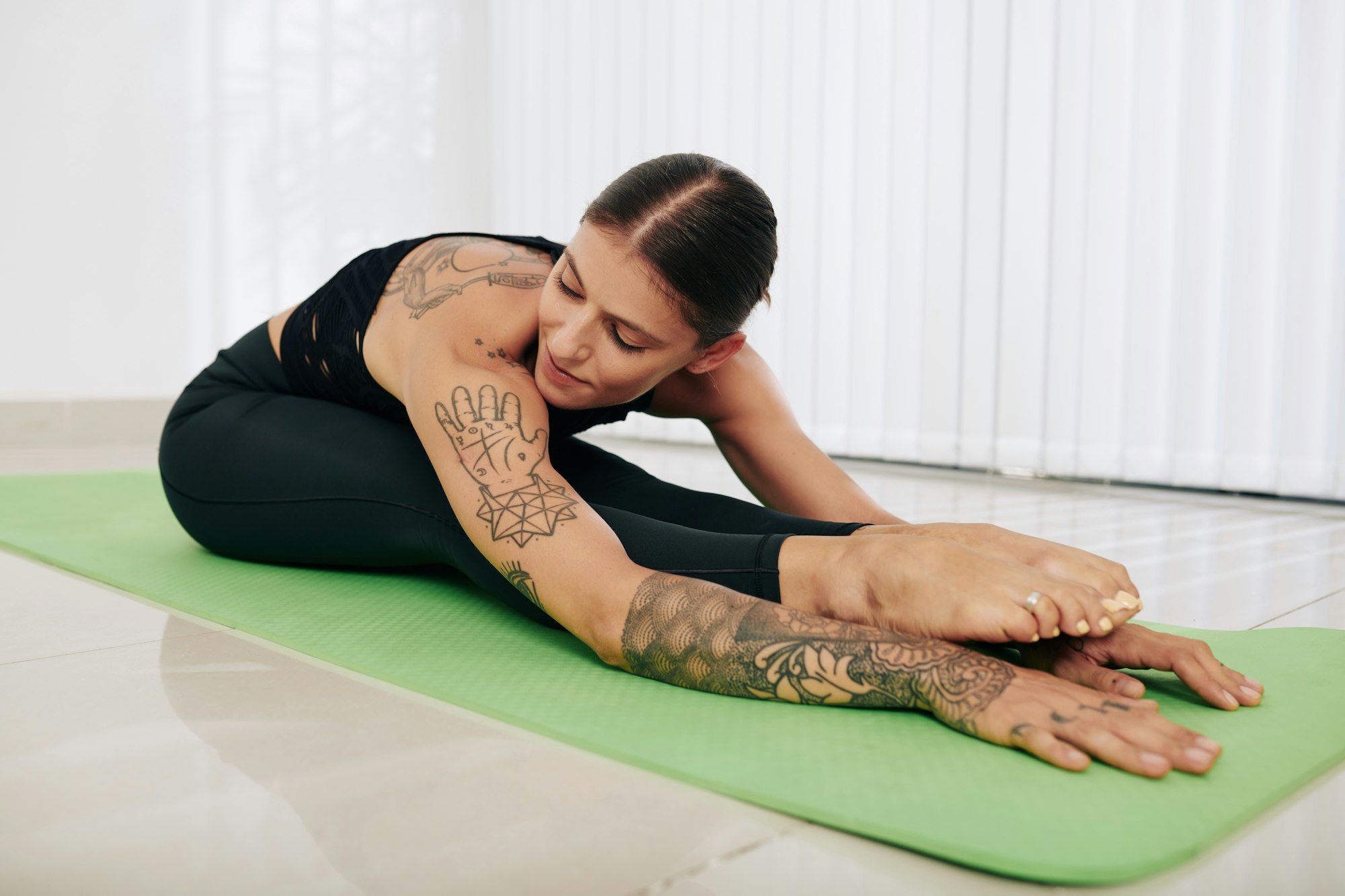
Seated forward bend


– This pose stretches the spine, hamstrings, and lower back, releasing physical tension while calming the mind. It promotes introspection and reduces anxiety.
– **How to do it**: Sit with your legs extended in front of you. Inhale, lengthen your spine, and as you exhale, reach forward to hold your feet or shins. Hold for several breaths.

Incorporating Yoga into Your Daily Routine

For stress management, consistency is key. You don’t need to spend hours on the mat to reap the benefits—just 10 to 20 minutes a day can make a significant difference. Here are a few tips for incorporating yoga into your daily life:

– **Start Small**: Begin with a short practice of simple poses and breathing exercises. As you become more comfortable, you can gradually extend your sessions.
– **Create a Calm Space**: Designate a quiet, clutter-free space in your home where you can practice yoga without distractions.
– **Practice Mindful Breathing**: Even if you can’t do a full yoga session, take a few minutes to practice deep breathing or pranayama when you feel stressed.
– **Join a Class or Use Apps**: Consider joining a local yoga class or using online resources and apps that offer guided yoga sessions designed for stress relief.
– **Combine with Meditation**: End your practice with a few minutes of meditation to deepen the sense of calm and relaxation.

Conclusion

The power of yoga for stress management is undeniable. By incorporating yoga into your daily routine, you can cultivate a greater sense of peace, improve your physical health, and develop resilience against life’s challenges. Whether you’re a beginner or an experienced practitioner, yoga offers a sanctuary where you can reconnect with your breath, body, and mind—helping you navigate stress with grace and ease.

If you want to enroll for our Yoga or Meditation Class online,

Register for the free webinar by clicking here.  REGISTER


Introduction

Emotional trauma unlike physical trauma does not heal quickly, if at all. Although, trauma exists in the mind or in the schema of the person, it is not directly visible to the eye. For example, if you apply analgesic cream on the trauma such as a bruise on the hand, normalcy returns. But when it comes to emotional trauma, it is more discreet.

How to Use Yoga to Release the stored toxins

Because emotional trauma is a complex experience, it leaves deep imprints on the mind. Often these imprints manifest as stress, anxiety, depression, and even physical ailments. While traditional therapies play a crucial role in healing, yoga has emerged as a powerful complementary practice to release emotional trauma.


Sad, woman and portrait with depression in house for psychological trauma, grief and burnout. Menta


In fact, by integrating movement, breath-work, and mindfulness, yoga helps individuals reconnect with their bodies. Moreover, by processing their emotions, it fosters a sense of inner peace. Let us explore how yoga can be an effective tool in releasing emotional trauma which provides practical steps to incorporate it into one’s healing journey.

Understanding Emotional Trauma

Before delving into how yoga can help, it’s important to understand what emotional trauma is. Actually, emotional trauma occurs when an individual experiences a distressing event or series of events. Either someone may have inflicted it on them, or It may have happened naturally.

the letters of the alphabet are arranged in a spiral with the word trauma.

However, the common factor is, the event is too overwhelming for them to cope. This can include situations like abuse, loss, accidents, or even chronic stress. The trauma often leaves a lasting impact, leading to feelings of helplessness, fear, and disconnection from oneself and others.  In addition, the effects of emotional trauma can linger for years, influencing one’s mental, emotional, and physical well-being.

The Connection Between Trauma and the Body

The mind and body are deeply interconnected, and emotional trauma is often stored in the body as tension, pain, or chronic stress. This phenomenon is known as somatization, where emotional distress manifests in physical symptoms. Trauma can cause the body to remain in a state of heightened arousal, often referred to as the “fight or flight” response.

This prolonged state of stress can lead to muscle tightness, shallow breathing, and other physical symptoms that further exacerbate emotional distress. Yoga, with its emphasis on mindful movement and breath awareness, offers a way to gently release these stored tensions. Through yoga, individuals can begin to reconnect with their bodies, allowing them to process and release the emotions that have been trapped within.

How Yoga Helps in Releasing blocks

Yoga works on multiple levels—physical, emotional, and spiritual—to facilitate the release of emotional trauma. Here are some of the key ways in which yoga can help:

1. Mindful Movement: Trauma often causes individuals to become disconnected from their bodies, leading to a sense of numbness or dissociation. Yoga encourages mindful movement, which helps individuals become more aware of their bodily sensations. This heightened awareness can be the first step in reconnecting with the body and identifying areas of tension where trauma may be stored.

Breathing is the Key

2. Breath-work (Pranayama): Breath is a powerful tool in yoga that directly influences the nervous system. Trauma often leads to shallow breathing, which can perpetuate feelings of anxiety and stress. Pranayama, or yogic breathing techniques, help to regulate the breath, calming the nervous system and promoting a sense of safety and relaxation. Deep, conscious breathing also helps to release stored emotions, making it an essential practice in trauma recovery.

3. Grounding Techniques: Many yoga poses are designed to create a sense of grounding and stability. Grounding is particularly important for individuals with trauma, as it helps them feel more connected to the present moment and their physical surroundings. Poses like Tadasana (Mountain Pose) and Balasana (Child’s Pose) are excellent for fostering a sense of safety and grounding.


Multiple Dimensions

4. Emotional Release Through Movement: Certain yoga poses can help to release emotions that have been trapped in the body. For example, hip-opening poses like Pigeon Pose (Eka Pada Rajakapotasana) are known to release pent-up emotions, as the hips are often where we store emotional tension. Heart-opening poses like Camel Pose (Ustrasana) can also facilitate the release of grief and sadness.

5. Meditation and Mindfulness: Meditation is a core component of yoga that helps individuals cultivate mindfulness. Mindfulness involves paying attention to the present moment without judgment, which can be incredibly healing for those with trauma. By practicing mindfulness, individuals can observe their thoughts and emotions with compassion, rather than becoming overwhelmed by them. This shift in perspective can lead to greater emotional resilience and the ability to process trauma more effectively.

6. Creating a Safe Space: One of the most important aspects of using yoga to heal emotional trauma is creating a safe space. This involves both the physical environment in which you practice and the internal space you cultivate within yourself. A safe space allows you to explore your emotions without fear of judgment or retraumatization. This might mean practicing in a quiet, comfortable room where you feel secure, or it could involve setting boundaries with yourself to ensure that you’re approaching your practice with kindness and patience.

Cute fat domestic cat lying down in cozy gray felt basket, fall or winter season. Place for sleep

Safe place, you bet!

Practical Yoga Poses

If you’re looking to use yoga to release emotional trauma, here are some practical steps and poses to incorporate into your practice:

1. Start with Gentle Yoga: If you’re new to yoga or if your trauma is recent, start with gentle yoga practices that focus on slow, mindful movements. Yin Yoga or Restorative Yoga are excellent choices, as they emphasize long holds and deep relaxation.

2. Incorporate Breath-work: Begin each session with a few minutes of pranayama. A simple technique like diaphragmatic breathing (deep belly breathing) can help calm the nervous system and prepare your body and mind for practice.

3. Focus on Grounding Poses: Incorporate grounding poses such as Tadasana (Mountain Pose), Balasana (Child’s Pose), and Sukhasana (Easy Pose) to help you feel stable and connected to the earth. These poses can create a sense of safety and provide a strong foundation from which you can explore deeper emotional work.

Opening your inner Self

4. Explore Hip-Opening Poses: As mentioned earlier, the hips are a common area where emotional trauma is stored. Incorporate hip-opening poses like Pigeon Pose (Eka Pada Rajakapotasana), Bound Angle Pose (Baddha Konasana), and Garland Pose (Malasana) into your practice. Hold these poses for several breaths, allowing yourself to feel any emotions that arise.

5. Practice Heart-Opening Poses: To release grief, sadness, or other heart-related emotions, include heart-opening poses in your routine. Poses like Camel Pose (Ustrasana), Bridge Pose (Setu Bandhasana), and Cobra Pose (Bhujangasana) can help open the chest and allow emotional release.

6. Integrate Meditation and Mindfulness: End your yoga session with a few minutes of meditation or mindful breathing. This helps consolidate the benefits of your practice and allows you to sit with any emotions that have surfaced. Techniques like body scan meditation, where you mentally scan and relax different parts of your body, can be particularly effective for trauma survivors.

7. Create a Regular Practice: Consistency is key when using yoga to heal emotional trauma. Aim to practice regularly, even if it’s just for a few minutes each day. Over time, this regular practice will help you build a deeper connection with your body and facilitate ongoing emotional release.

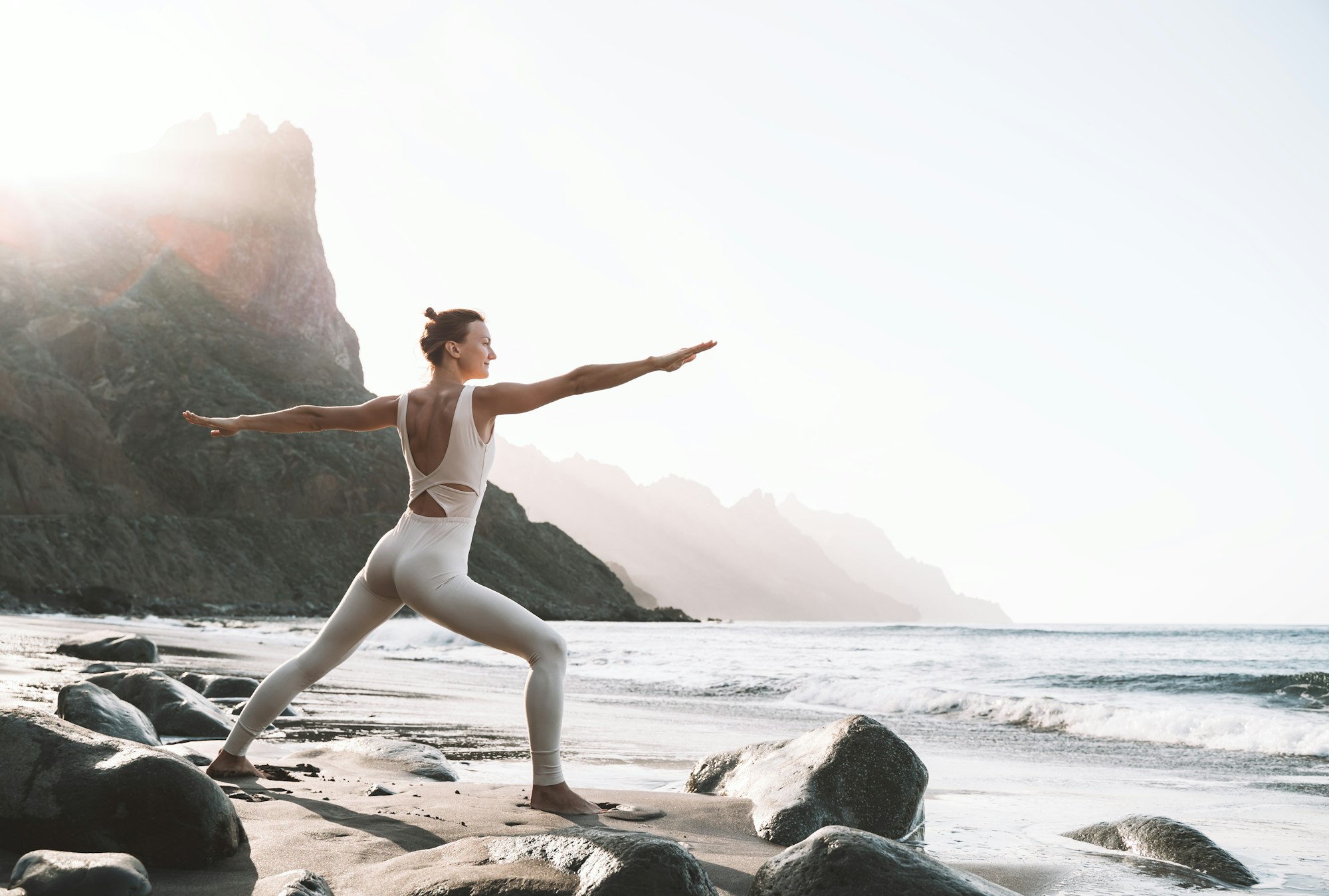
Woman is practicing yoga on the beach.

Practice makes it perfect!

Additional Tips for Using Yoga to Heal

1. Listen to Your Body: Yoga is about connecting with your body, so always listen to what it’s telling you. If a pose feels too intense or triggers overwhelming emotions, ease out of it and return to a pose that feels safer. The goal is to gently release trauma, not to retraumatize yourself.

2. Seek Professional Guidance: If you’re dealing with significant emotional trauma, consider working with a yoga therapist who specializes in trauma-informed yoga. They can guide you through practices tailored to your specific needs and ensure that your practice is safe and effective.

Combining Yoga with Mindfulness

3. Combine Yoga with Other Therapies: Yoga is a powerful tool, but it’s often most effective when combined with other forms of therapy, such as talk therapy or EMDR (Eye Movement Desensitization and Reprocessing). A holistic approach can provide a more comprehensive path to healing.

4. Be Patient: Healing emotional trauma is a process, and it takes time. Be patient with yourself and recognize that it’s okay to move at your own pace. Celebrate the small victories and allow yourself to rest when needed.

5. Practice Self-Compassion: Above all, practice self-compassion. Healing from trauma is challenging, and it’s important to treat yourself with kindness and understanding. Remember that yoga is not about achieving perfection but about creating a space for healing and self-discovery.

Mindful woman at lake

Conclusion

Yoga offers a gentle, holistic approach to releasing emotional trauma, helping individuals reconnect with their bodies and process their emotions. By integrating mindful movement, breath-work, grounding techniques, and meditation, yoga creates a safe space for healing. Whether you’re just beginning your journey or looking to deepen your practice, yoga can be a powerful ally in your path to emotional recovery.

Remember, healing is a journey, not a destination. As you continue to explore yoga as a tool for releasing emotional trauma, trust in the process and be gentle with yourself. With consistent practice and self-compassion, yoga can help you move towards greater emotional freedom and inner peace.


Pranayama and Deep Breathing

Harnessing Energy and Relaxation for Optimal Health and Well-being

Introduction:

In the fast-paced world we live in, finding moments of peace and serenity can be challenging. Fortunately, there is a simple yet powerful practice that can significantly improve our physical, mental, and emotional well-being. As a matter of fact, it is nothing but ‘Deep Breathing’.

By focusing on our breath, we can tap into a wellspring of energy and relaxation that can transform our lives. What is more,let us see how we can do that in this blog post. With this in mind, let us explore the profound benefits of deep breathing and how it can enhance your health and overall sense of well-being.

pranayama

Understanding the Power of Deep Breathing:

Deep breathing, also known as diaphragmatic breathing or belly breathing, involves taking slow, deliberate breaths, fully engaging the diaphragm and expanding the belly. Without doubt, this technique allows for a greater intake of oxygen, resulting in numerous health benefits. When we breathe deeply, we engage the parasympathetic nervous system, which promotes relaxation and counters the effects of stress.

Energize Your Body:

One of the remarkable benefits of deep breathing is its ability to invigorate and energize the body. When we take deep breaths, we bring in more oxygen, which is essential for optimal cellular function. In addition, oxygen fuels our cells, boosts metabolism, and enhances overall vitality. Therefore, by incorporating deep breathing into our daily routine, we can experience increased energy levels and a renewed sense of vigor.

Relaxation and Stress Reduction:

In today’s hectic world, stress has become a prevalent concern that impacts our well-being. That is why, Deep breathing is an invaluable tool for combating stress and inducing relaxation. When we breathe deeply, it triggers the release of endorphins, the body’s natural feel-good hormones. These endorphins promote a sense of calmness and tranquillity, reducing anxiety and easing tension in both the mind and body.

Enhance Mental Clarity:

Clearing the mind and improving focus are essential for overall well-being. Deep breathing can help us achieve mental clarity. By engaging in slow, deliberate breaths, we redirect our attention away from racing thoughts and bring it back to the present moment. This practice helps quiet the mind, increases mindfulness, and enhances our ability to concentrate on the tasks at hand.

Boost Immunity:

Deep breathing is not only beneficial for our mental and emotional well-being but also for our physical health. It has been shown to support a robust immune system. The increased oxygen flow resulting from deep breathing stimulates the production and activity of immune cells, enhancing our body’s ability to defend against illnesses and diseases.

Detoxify the Body:

Efficient breathing plays a vital role in detoxifying our bodies. Deep breathing helps to expel toxins by encouraging the lymphatic system’s proper functioning. Moreover, the rhythmic expansion and contraction of the diaphragm during deep breaths promote lymphatic drainage, aiding in the removal of waste and toxins from our system.

Deep Breathing Techniques:

There are various deep breathing techniques you can incorporate into your daily routine. Some popular techniques include:

a. Diaphragmatic Breathing:

Place one hand on your abdomen and inhale deeply through your nose, allowing your belly to rise as you fill your lungs with air. Additionally, exhale slowly through your mouth, feeling your belly gently fall.

b. 4-7-8 Breathing:

Inhale deeply through your nose for a count of 4, hold your breath for a count of 7, and exhale slowly through your mouth for a count of 8. Afterwards, repeat this cycle several times.

c. Alternate Nostril Breathing:

Close your right nostril with your right thumb and inhale deeply through your left nostril. Here you have to make sure you are doing this using long breathing in a gentle way. Then pause briefly, and close your left nostril with your right ring finger and exhale through your right nostril. In addition, remember to do this on the left & right nostrils alternatively.

Conclusion:

Therefore,Deep breathing and pranayama are simple yet powerful practices that can positively impact your overall health and well-being. While deep breathing is a general term, pranayama is a key practice within the sphere of deep breathing. Besides, incorporating deep breathing techniques into your daily routine, additionally, you can tap into a wellspring of energy, thus reduce stress, and promote relaxation. Take the time to prioritize your breath and unlock the transformative power of deep breathing. Thereafter, embrace the potential for improved physical, mental, and emotional health. In other words, experience the profound benefits it can bring to your life.

Overview

“Yoga Postures: Unlocking Your Inner Strength and Balance”

Introduction

Exploring Yoga postures today is an important pursuit for health conscious people. Yoga is an ancient practice that has been in use for centuries to promote physical and mental well being. They are a form of exercise that can help to improve flexibility, strength, balance, and coordination. Also, Yoga postures can help to reduce stress, improve concentration, and increase energy levels. With regular practice, yoga postures can help to improve overall health and well being. In this article, we will explore the different types of yoga postures and their benefits.

Exploring the Benefits of Restorative Yoga: How to Use Props to Deepen Your Practice

Restorative yoga is a gentle form of yoga that focuses on relaxation and healing. It is a practice that can be used to reduce stress, improve sleep, and increase overall well being. By using props such as bolsters, blankets, and blocks, practitioners can deepen their practice and experience the full benefits of restorative yoga.

Why Use Props?

The use of props in restorative yoga helps to create a sense of comfort and support. Bolsters are a great tool for providing support to the body in various poses. Especially useful if the student is suffering from stiffness in the joints that prevents him/her to do the poses.  They also support the spine, hips, and legs, allowing the body to relax more deeply. Blankets provide warmth and comfort, besides supporting the body while doing the poses. Moreover, Blocks help the body find a more comfortable position in poses, as well as to provide support for the head and neck.

Things to remember:

When using props in restorative yoga, it is important to remember that the body maybe a bit stiff for many practitioners. It is also important to make sure that the placement of the props allows the body to relax and open. For example, when using a bolster,the spine, neck  and shoulders are free from any tension. Using a blanket, ensures that the body becomes warm and comfortable without putting any strain on the joints.

Caucasian females legs on yoga mat with yoga props

Using props in restorative yoga can help to deepen the practice and allow the body to relax more deeply. By providing support and comfort, props can help to create a sense of safety and security, allowing the body to let go of tension and stress. With regular practice, the use of props can help to create a sense of balance and harmony in the body, allowing practitioners to experience the full benefits of restorative yoga.

The Benefits of Pranayama: Exploring the Benefits of Breath work in Yoga

Pranayama is an ancient practice of breath work in yoga that has been in vogue for centuries to promote physical and mental well being. It is a powerful tool for self-care which reduces stress, improves concentration, and increases the energy levels. Pranayama is a Sanskrit word that translates to “extension of the breath” or “breath control.” It is a practice of controlling the breath through various breathing techniques, such as deep breathing, alternate nostril breathing, and kapalabhati.

pranayamam

Group of people practicing alternate nostril breathing technique

Physical Benefits:

The practice of pranayama has many benefits for both physical and mental health. Physically, it can help to improve respiratory function, reduce blood pressure, and increase oxygen levels in the body. It can also help to improve digestion, reduce fatigue, and improve overall physical health.

Mentally, pranayama can help to reduce stress and anxiety, improve concentration, and increase mental clarity. In addition, to improving sleep quality and reducing insomnia, it is easy to practice it as well. It is a simple practice that requires no special equipment or clothing. All it requires is a comfortable place to sit and a few minutes of uninterrupted time. One can do it alone or with a group of people. It is a great way to connect with yourself and with others.

Pranayama is a powerful tool for self-care. It is a simple practice that reduces stress and anxiety, improves concentration, and increases energy levels. It is a great way to connect with yourself spiritually.

Exploring the Benefits of Inversions: How to Safely Practice Headstands and Shoulder stands

Inversions are yoga poses that involve inverting the body, such as headstands and shoulder-stands also known as Sirsasan and Sarvangasana. These poses can provide a variety of physical and mental benefits, including improved circulation, increased energy, and improved concentration. However, it is important to practice inversions safely in order to avoid injury preferably under the guidance of a qualified yoga instructor.

When practicing headstands, it is important to use a wall for support. Begin by kneeling on the floor and placing your forearms on the ground. Place the top of your head on the floor and interlace your fingers. Slowly walk your feet in towards your head until your hips are over your shoulders. Lift your feet off the ground and press your toes into the wall. Hold the pose for as long as is comfortable.

Lifestyle. Young woman exploring yoga for balance

Lifestyle. Young woman exploring yoga for balance

Shoulder stands are a bit more challenging than headstands, but can be just as beneficial. Begin by lying on your back with your legs together and your arms at your sides. Bend your knees and bring your feet towards your buttocks. Place your hands on your lower back for support and slowly lift your legs up towards the ceiling. Keep your legs straight and your toes pointed. Hold the pose for as long as is comfortable.

Inversions can provide a variety of physical and mental benefits, but it is important to practice them safely in order to avoid injury. When practicing headstands and shoulder stands, use a wall for support and hold the poses for as long as is comfortable. With regular practice, you can enjoy the many benefits of inversions.

The Benefits of Sun Salutations: Exploring the Benefits of a Classic Yoga Sequence

Sun salutations, or Surya Namaskar, is a classic yoga sequence that is prelude to yogasanas proper.This sequence of 12 postures is designed to warm up the body and prepare it for a more intense yoga practice. Sun salutations are also a great way to start the day, as they can help to energize the body and mind.

12 Step process:
Sun salutation for the perfect balance

Woman doing yoga Sun salutation Surya Namaskar

The sequence of postures helps to increase circulation and flexibility, while also strengthening the muscles. This can help to reduce the risk of injury during a yoga practice. Additionally, sun salutations can help to improve posture and balance, as well as increase core strength.

Sun salutations are also a great way to start the day. The sequence of postures helps to energize the body and mind, while also calming the nervous system. This can help to reduce stress and anxiety, while also improving focus and concentration. Additionally, sun salutations can help to improve digestion and metabolism, as well as boost the immune system.

Finally, sun salutations are a great way to connect with the breath. The sequence of postures helps to synchronize the breath with the movements, which can help to improve breathing technique and increase lung capacity. This can help to reduce stress and improve overall well being.

Conclusion

In conclusion, yoga postures are an excellent way to improve physical and mental health. They can help to reduce stress, improve flexibility, and strengthen the body. With regular practice, yoga postures can help to improve overall well being, balance and quality of life. In particular, sun salutations are a great way to warm up the body and prepare it for a more intense yoga practice. They can also help to energize the body and mind, while also calming the nervous system.. Additionally, sun salutations can help to improve posture and balance, as well as increase core strength and connect with the breath.


Newsletter

Yoga Dhyan Updates & News Weekly

Yoga Dhyan Center
Sign up to be in the know.